Offshore Bookkeepers guide

Intercompany recharge support: a two-ledger close process

Build traceable intercompany recharge schedules, match both entity ledgers, and route policy or tax decisions to the appropriate reviewer.

Build traceable intercompany recharge schedules, match both entity ledgers, and route policy or tax decisions to the appropriate reviewer.

The short answer

  • Give every recharge a shared reference, source cost, service period, allocation basis, currency, and counterparty.
  • Reconcile the sender and receiver independently; do not plug one ledger merely to make the pair agree.
  • Bookkeeping support can prepare and match approved charges, while finance and tax owners approve methods, markups, disputes, and corrections.

Establish the charge before calculating it

Create one line for each charge, rather than netting unrelated items. Capture the entity that incurred the cost, beneficiary, vendor or payroll source, service period, source amount, allocation driver, approved markup if applicable, invoice currency, functional-currency amount, and recharge reference. Link the governing agreement or current finance instruction.

The allocation basis needs evidence. Headcount may be supported by a dated employee report; usage by a system export; floor area by an approved facilities schedule. If the instruction says “allocate fairly” but provides no method, record an exception. Choosing a method is a finance-policy decision, not a bookkeeping completion step.

Build entries that can meet in the middle

Use the same recharge reference and service period in both ledgers. The workpaper should display the proposed sender and receiver entries side by side, including account names, legal entities, currencies, exchange rates and posting dates. Preserve the source currency even when each ledger records a different functional currency.

For example, if Parent pays a software bill used by three subsidiaries, the schedule should begin with the vendor invoice and then show each approved allocation. The parent-side total should reconcile to the allocated source cost under the approved policy. Each subsidiary line should reconcile to its own payable or intercompany account. A rounding residual should remain visible and follow the approved treatment; it should not be silently added to one entity.

Reconcile counterpart records

Extract intercompany activity and balances from each entity after posting. Match by reference, counterparty, currency and amount, then classify differences. Common categories include an entry posted on only one side, different periods, duplicate posting, exchange-rate treatment, disputed allocation, or cash settlement recorded against the wrong counterparty.

Do not “fix” an unmatched amount with an unsupported journal. Record the amount on each ledger, likely cause, evidence requested, owner and next action. For a recharge raised before close but received after the recipient’s ledger locked, the evidence may support a timing item; the receiving entity’s authorized reviewer still decides whether an accrual or later-period entry is appropriate.

Handle netting and settlement separately

Recharge recognition, balance confirmation and cash settlement are different events. If entities settle multiple balances net, retain the gross invoices and an approved netting statement that maps every item to the payment. Never infer permission to net merely because receivables and payables share a counterparty.

At close, roll opening balance plus new charges, credits, currency movements and settlements to the ending balance for each entity pair. Confirm that the counterpart schedule explains the same relationship, while allowing documented currency differences.

Define the review boundary

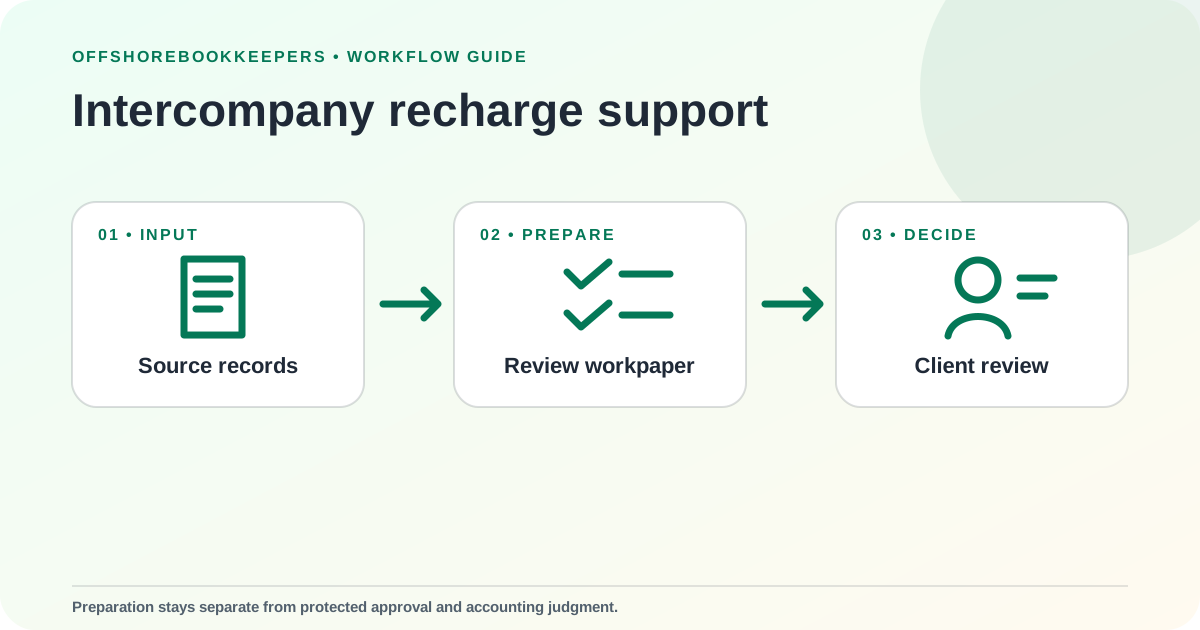
Bookkeeping support can collect invoices, apply an approved allocation, prepare entries, match ledgers and maintain the exception log. The controller, entity owner or tax adviser should approve a new allocation basis, markup, legal-entity characterization, tax treatment, write-off, netting arrangement, and disputed correction. Keep that approval with the recharge pack so the next close does not have to reconstruct the decision.

Questions owners ask

What belongs in a recharge workpaper?

Include the source cost, covered period, entities, allocation calculation, currency, matching references, entries on both ledgers, approval, and unresolved differences.

Who decides the allocation or markup?

The authorized finance and tax reviewers should approve the method and any markup. A bookkeeper can apply a documented, approved rule and flag departures from it.

Keep planning