Offshore Bookkeepers guide

Inventory receiving cutoff at month-end

Connect physical receipts, purchase orders, vendor invoices, and inventory records so period-end cutoff exceptions remain visible and reviewable.

Connect physical receipts, purchase orders, vendor invoices, and inventory records so period-end cutoff exceptions remain visible and reviewable.

The short answer

  • Freeze the receiving population with a documented cutoff time and retain the reports used.
  • Test activity on both sides of period-end against receiving evidence, purchase orders, invoices, and inventory movements.
  • Warehouse and bookkeeping teams can document facts, but an authorized accountant decides accounting recognition when terms or evidence are unclear.

Define and preserve the cutoff population

Record the reporting date, warehouse timezone, final receiving time, locations covered, and system reports used. Export sequential receipt numbers and inventory movements before the data changes. Include receipts entered shortly before and after cutoff, open purchase orders, unmatched vendor invoices, transfer records, returns, and shipments expected around period-end.

Keep both the physical event time and system-entry time. A pallet may arrive before close but be entered the following morning; conversely, a receipt may be pre-entered while the shipment is still in transit. Those cases should appear as exceptions rather than being forced into agreement.

Trace the receiving chain

For each selected receipt, connect the purchase order, supplier packing list, carrier or dock evidence, receiving record, inspection status, inventory movement, and vendor invoice when available. Capture item, quantity, unit of measure, location, lot or serial reference where relevant, and the employee or device recording receipt.

Three-way matching is useful, but a match is not proof by itself. If a purchase order, receipt and invoice all show 100 units while the warehouse notes ten damaged units in quarantine, preserve the discrepancy. The reviewer needs the condition and disposition evidence before deciding valuation or return treatment.

Test both sides of period-end

Review a continuous sequence of receipts before and after cutoff instead of looking only at entries dated on the final day. Search for late-entered receipts with earlier physical evidence, invoices posted without receipts, negative inventory movements, reversals, duplicate receipt numbers, and manual date changes.

Consider a shipment unloaded on the final evening but recorded the next day. The workpaper should show arrival evidence, acceptance or inspection status, terms supplied with the purchase, the date inventory entered the subledger, and any payable entry. A bookkeeper can assemble these facts and propose treatment under a written rule. If ownership timing or acceptance is ambiguous, the accountant decides the period.

Separate transfers, returns and goods in transit

An inter-warehouse transfer should not create a new external purchase, but it can distort location counts if one side records it before the other. Match transfer-out and transfer-in references and keep in-transit quantities visible.

For supplier returns, distinguish goods staged for return, goods collected, credit notes received, and credits posted. For inbound goods in transit, retain shipping documents and purchase terms rather than assuming that dispatch or delivery alone determines recognition. Terms may be incomplete or modified by contract, so escalate conflicts instead of interpreting them informally.

Reconcile quantities and accounting

Roll the inventory subledger from opening quantity through purchases, production or adjustments, transfers, sales and returns to ending quantity. Reconcile its value to the general ledger and list differences by item or transaction. Tie received-not-invoiced items to the accrual or payable process without creating both an automated receipt accrual and a duplicate manual accrual.

Close with named exceptions

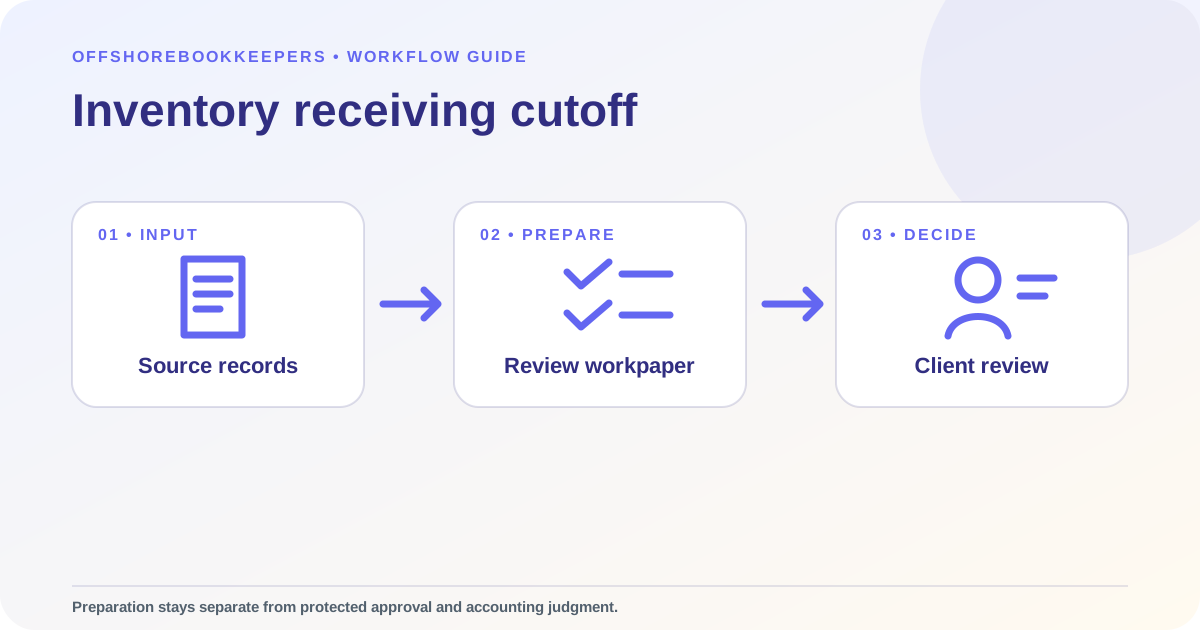
The final cutoff file should contain frozen reports, tested receipt references, supporting documents, findings, proposed entries, approvals and an exception log. Warehouse personnel confirm physical events and condition. Bookkeeping support performs matching and prepares approved entries. The controller or accountant retains decisions about ownership, recognition, valuation, write-downs and unresolved variances.

Questions owners ask

Does a vendor invoice date prove inventory was received?

No. It is one data point. Receiving logs, carrier records, inspection status, purchase terms, and system movements help establish what happened and when.

What if goods are physically present but quarantined?

Document arrival, inspection or quarantine status, system location, and purchase terms. The accounting reviewer should decide recognition and valuation under the company’s policy.

Keep planning