Offshore Bookkeepers guide

Merchant reserve release review and reconciliation

Separate merchant reserves from ordinary payouts and trace holds, releases, deductions, and cash to processor evidence.

Separate merchant reserves from ordinary payouts and trace holds, releases, deductions, and cash to processor evidence.

The short answer

  • Roll each processor reserve from opening balance through new holds, releases, deductions, and ending balance.
  • Match reserve releases to processor statements and bank settlements without treating every payout difference as a release.
  • Escalate classification, impairment, write-off, dispute, and contract-interpretation decisions to the authorized finance owner.

Understand the processor’s reserve mechanics

Start with the merchant agreement, current reserve notices and processor statement terminology. Identify whether the provider describes a rolling hold, fixed reserve, transaction-specific hold or another arrangement. Record the merchant account, legal entity, currencies, withholding basis described by the processor, expected release information if stated, and where reserve activity appears in reports.

Do not infer a release date from prior behavior when the processor has not confirmed one. Contracts can change, disputes can extend holds, and provider dashboards may show estimates rather than commitments. Keep expected dates labeled by source and retrieval date.

Build a reserve rollforward

Prepare a separate schedule for each processor account and currency:

  • opening reserve balance;
  • new amounts withheld;
  • amounts released;
  • chargebacks, refunds or other deductions applied against reserve;
  • provider adjustments and currency effects; and
  • ending reserve balance.

Tie opening balance to the prior approved schedule and ending balance to the provider statement or dashboard export. Link every movement to transaction-level detail where available. Reconcile the schedule to the relevant general-ledger balance without assuming that the processor’s labels determine the accounting classification.

Trace a release through settlement

A reserve release may appear in a payout that also contains gross sales, refunds, processing fees and disputes. Reconstruct the entire settlement bridge rather than matching the release directly to the net bank deposit.

For example, a payout report may include current transaction proceeds, a reserve hold, an older reserve release and fees. The bank receives only the combined net amount. The workpaper should identify each component, tie the net to the bank and update the reserve only for the hold and release components. Posting the whole deposit to sales would hide both fees and reserve activity.

Record the provider’s release identifier, original hold cohort if available, settlement date, bank date, currency and ledger entry. When a release is partial, leave the unreleased cohort open. Do not close it merely because some cash arrived.

Investigate aging without inventing conclusions

Age open holds by the provider’s original transaction or hold date. Compare actual activity with documented terms or notices and review subsequent statements for releases. Exceptions may include an expired expected date, unexplained provider adjustment, release sent to a different bank account, negative reserve, missing statement, or hold attached to a disputed transaction.

For an overdue expectation, retain support tickets or correspondence and assign a follow-up owner. The schedule can flag uncertainty, but it should not call the amount collectible, impaired or written off without the authorized accounting decision.

Watch for practical edge cases

If the processor settles in multiple currencies, maintain currency-specific balances and show translation separately from provider movements. If the business changes legal entities or merchant accounts, do not carry the old reserve into the new account without evidence. Acquirer migration can result in overlapping reserves that need distinct schedules.

Chargebacks funded from reserve are not cash releases. Provider fees deducted from reserve also need their own line. Manual balance adjustments should be supported by provider documentation rather than used as a plug to make the rollforward agree.

Assign preparation and review

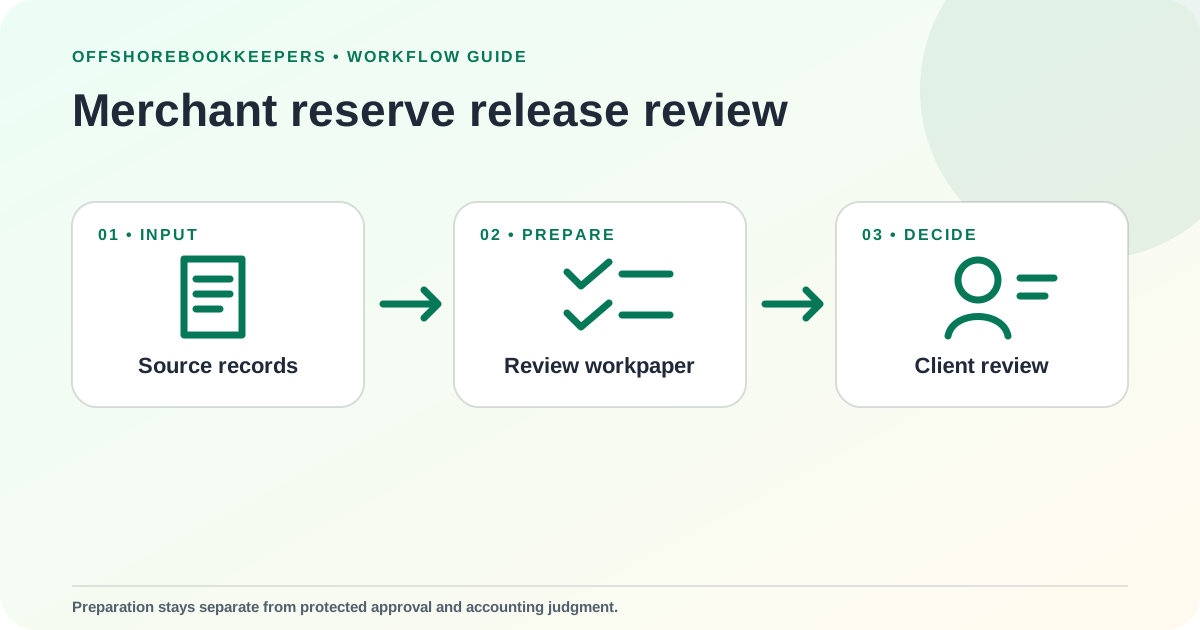
Bookkeeping support can download reports, build the rollforward, trace settlements, post entries under an approved mapping and maintain exceptions. The controller or accountant decides balance-sheet classification, foreign-currency treatment, impairment, write-off and corrections. Business owners handle processor disputes and contract questions. The close file should retain reports, bank matches, ledger tie-out, open cohorts, correspondence and reviewer approvals.

Questions owners ask

Why might a reserve release not equal the related bank deposit?

A settlement may combine current sales, fees, refunds, chargebacks, adjustments, and reserve activity. Use the processor’s transaction detail to bridge the net deposit.

What if a reserve remains open after an expected release date?

Verify that the expectation came from current processor evidence, document inquiries and subsequent activity, and route collectability or write-off decisions to the finance owner.

Keep planning