Offshore Bookkeepers guide

Payroll clearing account review

Separate payroll timing differences from missing postings and unexplained balances.

Separate payroll timing differences from missing postings and unexplained balances.

The short answer

  • Reconcile each pay date from the payroll register through the journal, cash withdrawal, and liability payments rather than treating the clearing account as one net balance.
  • Classify residual balances by cause and pay period so timing items are not confused with duplicate, missing, or incorrect postings.
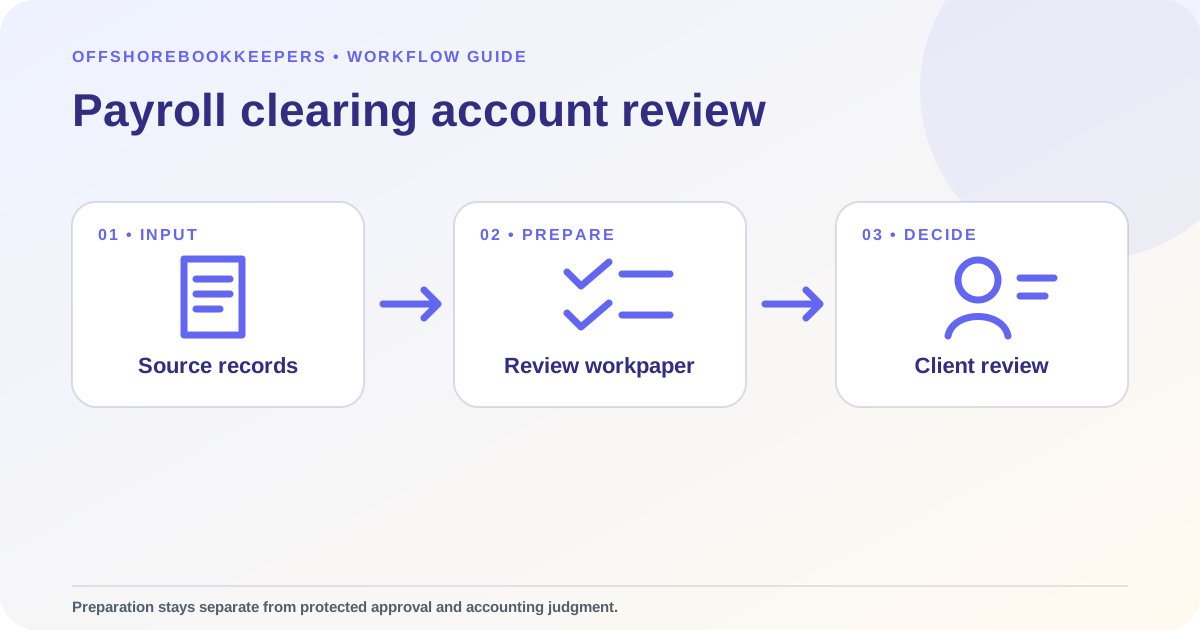
  • A bookkeeper may prepare the reconciliation and proposed corrections; an authorized reviewer should approve journal entries, payroll changes, and payment decisions.

Build the reconciliation by pay date

Use the payroll register as the starting record and create one row for each pay date. Capture gross wages, employee taxes and deductions, employer taxes, net pay, payroll fees, and the total amount expected to leave the bank. Add references to the payroll journal, bank transaction, and remittance reports. If the provider withdraws funds in several batches, list those batches separately rather than combining them into an unexplained total.

The opening clearing balance plus payroll-related debits and credits should equal the closing general-ledger balance. Also compare each component with the register. This two-way check matters because a journal and withdrawal can agree in total while wages, taxes, or fees are posted to the wrong accounts.

Separate timing from posting problems

Assign every unmatched amount to a pay period and a specific cause. Common categories include:

  • payroll recorded before the provider withdraws cash;
  • a tax or benefit remittance scheduled after month-end;
  • a bank withdrawal recorded without its payroll journal;
  • a journal posted twice or to the wrong clearing account;
  • a provider fee included in cash but omitted from the journal; or
  • a payroll reversal, returned payment, or off-cycle run awaiting support.

A genuine timing item needs an expected clearing date and a source reference. “Timing difference” without those details is not a sufficient explanation. If a dated item remains after its expected settlement, move it to the exception list for investigation.

Trace deductions and liabilities beyond cash

Some payroll configurations clear only net pay through the clearing account, while taxes and deductions move to separate liability accounts. Document the configured flow before investigating differences. Then confirm that deductions withheld from employees were credited to the intended liability and that subsequent payments reduced that same liability. Do not use a clearing-account adjustment to conceal a liability posted to the wrong account.

For each proposed correction, preserve the original transaction, the supporting register or payment report, the reason, and the accounts affected. IRS recordkeeping guidance is a useful baseline for retaining records that support business transactions, but the company should set its retention process with its payroll and tax advisers.

Give the reviewer a decision-ready packet

The bookkeeper can prepare the rollforward, match documents, research posting paths, and draft a correcting journal. The reviewer should receive the general-ledger detail, pay-date reconciliation, bank and provider references, and an exception list showing amount, age, cause, next action, and owner.

An authorized owner, controller, payroll administrator, or accountant should approve corrections, changes to payroll setup, employee-level adjustments, and payment releases. Close the review only when each residual amount has either cleared or has a documented owner and resolution date. The monthly close support service and reporting and review support provide related context for organizing that handoff.

Questions owners ask

Should a payroll clearing account always be zero at month-end?

Not necessarily. A documented balance may reflect payroll funded before a pay date, a bank withdrawal that posts after the journal, or a remittance in transit. The objective is to explain each component, not force the account to zero.

Who should approve a payroll correction?

A bookkeeper can document the variance and prepare a proposed entry. An authorized owner, controller, payroll administrator, or accountant should approve changes to payroll records, payments, or financial reporting.

Keep planning

Sources

  1. Internal Revenue Service, Recordkeeping