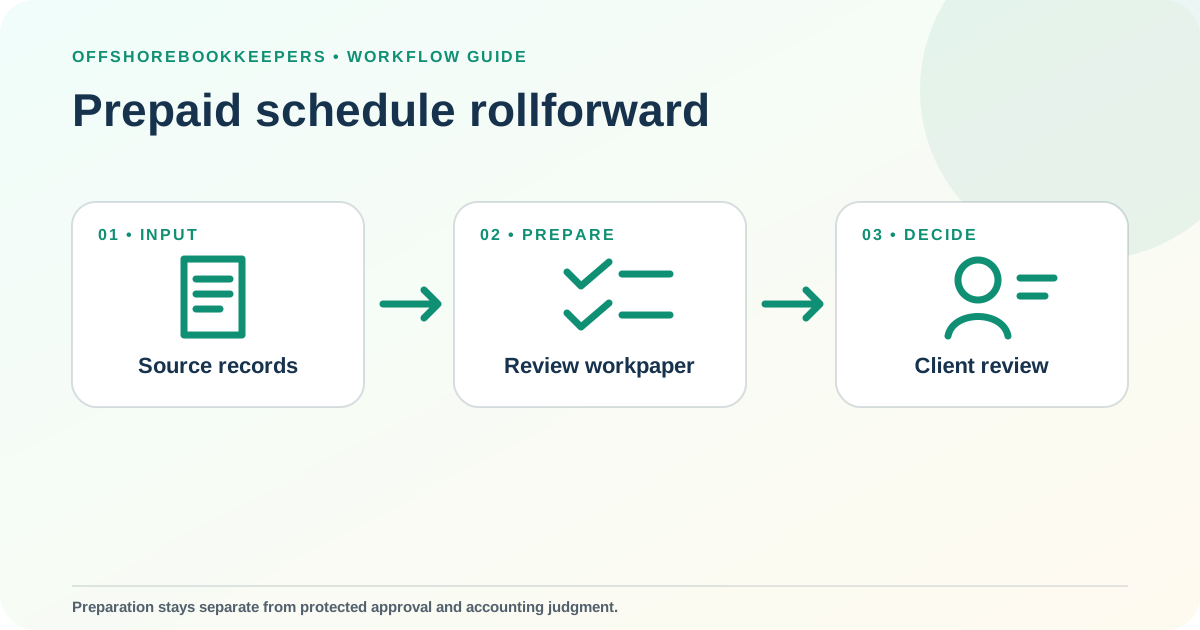
Offshore Bookkeepers guide

Prepaid schedule rollforward

Tie prepaid additions and releases to the underlying service periods.

Tie prepaid additions and releases to the underlying service periods.

The short answer

  • Maintain one schedule row for each prepaid item, including the invoice, service period, approved release method, additions, expense recognized, and ending balance.
  • Reconcile the schedule to the prepaid general-ledger accounts and investigate expired service periods, negative balances, duplicates, and unsupported additions.
  • Bookkeepers can maintain the rollforward and draft recurring entries, while accounting policy and unusual write-offs remain with an authorized reviewer.

Set up one row per prepaid item

Use a stable item ID and record the vendor, invoice number and date, description, prepaid account, expense account, original amount, service start and end dates, and document link. Add the approved recognition method and monthly amount. If one invoice covers several services or departments, split it into schedule lines when their service periods or coding differ.

The accounting policy belongs outside the spreadsheet. An authorized controller or accountant should determine which costs qualify as prepaids, any threshold, and whether recognition is straight-line or follows another pattern. The bookkeeper applies that approved policy and flags facts that do not fit it.

Roll forward the balance visibly

For each item, show opening balance, current-period additions, current-period expense release, other approved adjustments, and ending balance. The formula is simple:

Opening balance + additions − releases ± approved adjustments = ending balance.

Tie additions to posted invoices or payments according to the company’s process. Tie releases to the journal entry and relevant expense accounts. An addition should not enter the schedule merely because a transaction was coded to prepaid; confirm that the invoice and service dates support the schedule details.

When a service begins or ends mid-month, follow the company’s documented convention rather than inventing a one-off calculation. Save any proration calculation with the item so another person can reproduce it.

Review the dates, not just the total

Sort the schedule by service end date and investigate items that:

  • have ended but still carry a balance;
  • show expense before the service start date;
  • have a negative ending balance;
  • lack an invoice, agreement, or usable service-period evidence;
  • duplicate another invoice or schedule line;
  • were cancelled, refunded, credited, or materially changed; or
  • remain unchanged even though the service is underway.

A contract renewal is not evidence that the prior prepaid remains valid. Likewise, an expired item should not be rolled forward simply to make the schedule agree to the ledger. Record the exception, gather the facts, and obtain approval for any correction or write-off.

Reconcile schedule and ledger

Total the ending rows by prepaid general-ledger account and compare them with the trial balance. Explain differences at transaction level: an invoice not yet added to the schedule, a release posted to another account, a duplicate entry, or an approved journal awaiting posting. Also compare the total scheduled release with the expense side of the month’s journal.

The close packet should contain the dated schedule, ledger detail, journal reference, new invoices or agreements, and an exception log. IRS recordkeeping guidance provides general context for preserving records that support expenses; retention periods and accounting treatment should be confirmed with the company’s advisers.

The bookkeeper can update the schedule, prepare tie-outs, and draft routine entries from an approved template. The controller or accountant should approve policy choices, unusual recognition patterns, impairments, write-offs, and corrections. Related handoff options are described in monthly close support and reporting and review support.

Questions owners ask

What belongs on a prepaid schedule?

Include costs already paid or invoiced that the company has determined should be recognized over a future service period. The company’s accountant should decide capitalization and expense-recognition policy.

Who approves a change to the release pattern?

A bookkeeper may flag that usage or contract terms differ from the schedule, but an authorized controller or accountant should approve a revised accounting treatment.

Keep planning

Sources

  1. Internal Revenue Service, Recordkeeping