Offshore Bookkeepers guide

Recurring charge register

Verify recurring charges and identify services that no longer apply.

Verify recurring charges and identify services that no longer apply.

The short answer

  • Record the vendor, charge pattern, payment method, business owner, renewal terms, accounting code, and evidence link for each recurring commitment.
  • Compare expected charges with bank, card, and accounts-payable activity to find missing, duplicate, changed, and post-cancellation charges.
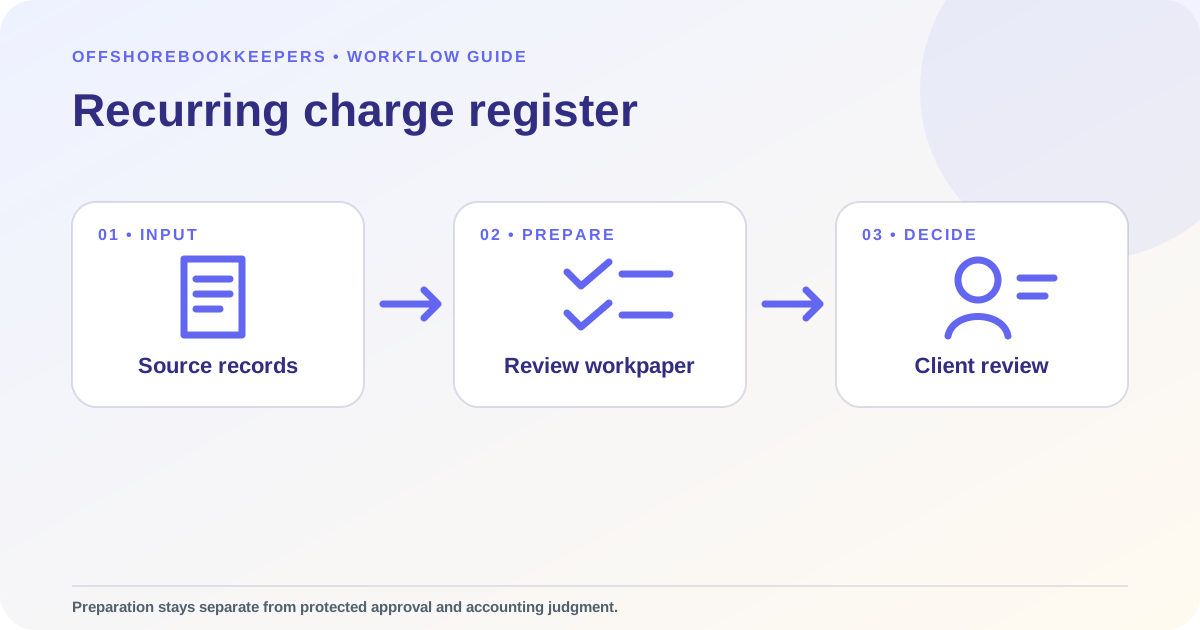
  • Bookkeeping staff can maintain the register and surface exceptions, but service cancellation, contract renewal, dispute, and payment approval require an authorized business owner.

Capture the commitment, not only the payment

Create one record for each recurring arrangement. Include the vendor and service, internal business owner, department, expected amount or pricing basis, cadence, next expected date, payment method, general-ledger code, start date, renewal date, cancellation notice deadline, and contract or invoice link. Record whether tax, usage, currency conversion, or seat count can change the amount.

Use a status such as active, pending cancellation, cancelled, disputed, or expired. Status changes need a date and evidence. Do not delete an old row when a service ends; preserving it helps explain later credits or charges.

Access details require care. The register may identify the last four digits of a card or the paying bank account, but it should not contain full card numbers, passwords, or shared login credentials. Keep system access in the company’s approved credential process.

Compare expected and actual activity

At each review, collect bank, card, and accounts-payable transactions for the period. Match them to the register using vendor, date, and amount while allowing for documented usage or price variations. Then create separate exception views for:

  • an expected charge that did not arrive;
  • two charges where one was expected;
  • a new repeating vendor not in the register;
  • an amount outside the contract or expected range;
  • a charge after the cancellation effective date;
  • an expired contract that continues to bill;
  • a refund or credit that remains outstanding; and
  • a charge coded to a different account or department.

A missing charge is not necessarily a saving. It may represent an unrecorded liability, a failed payment, or a changed billing date. Likewise, a higher charge may reflect approved usage. Label the observation first and obtain evidence before proposing accounting changes or contacting a vendor.

Review ownership and renewal dates

Send upcoming renewals and cancellation deadlines to the named business owner early enough for a decision under the contract. The owner should confirm whether the service is still needed, which users or locations it covers, and whether the terms changed. Bookkeeping staff can assemble invoices, payment history, and the agreement, but should not accept new terms, cancel operational services, or initiate disputes without authorization.

For variable subscriptions, periodically compare the billed unit count with an appropriate approved source, such as an administrator’s active-user report. The service owner validates whether access is still required; the bookkeeper should not deactivate users based solely on payment data.

Close exceptions with evidence

For each exception, record the amount, transaction date, issue, source links, owner, next action, due date, and resolution. Attach cancellation confirmations, credits, revised contracts, or approved coding instructions. If a refund is promised, keep it open until the credit appears and is recorded.

Reconcile register activity to the relevant expense, prepaid, payable, bank, and card records as applicable. The bookkeeper can maintain the register, perform matching, and draft supported corrections. Authorized budget holders approve renewals and cancellations; finance approvers retain payment release and accounting judgment. IRS recordkeeping guidance provides general context for retaining business expense support. Related close and review workflows appear under monthly close support and reporting and review support.

Questions owners ask

Is a recurring charge register the same as an accounts-payable list?

No. It tracks expected repeating commitments, including card charges and automatic debits that may never appear as open bills in accounts payable.

Can a bookkeeper cancel an unused subscription?

The bookkeeper can identify the charge, collect usage or contract information, and route a recommendation. A named budget or contract owner should authorize cancellation or renewal and retain the confirmation.

Keep planning

Sources

  1. Internal Revenue Service, Recordkeeping