Offshore Bookkeepers guide

Weekly cash commitments review: fields, controls, and handoff

Assemble approved and expected near-term cash obligations by date without turning a bookkeeping schedule into a payment decision or cash forecast.

Assemble approved and expected near-term cash obligations by date without turning a bookkeeping schedule into a payment decision or cash forecast.

The short answer

  • Set an as-of time, covered entities, accounts, currencies, and review horizon so the commitments list has a clear boundary.
  • List each obligation with source, counterparty, amount, expected payment date, approval status, confidence, owner, and payment reference; do not hide uncertainty in one total.
  • A bookkeeper can assemble and reconcile the schedule, while the owner or treasury lead decides priorities, deferrals, transfers, borrowing, and payment release.

Define the weekly snapshot

State the as-of date and time, covered legal entities, bank accounts, currencies, and horizon - for example, the next four weekly buckets. Identify the preparer, reviewer, payment approver, and date of the next refresh. Keep restricted cash and entity-specific balances separate; funds in one account may not be available for another entity or purpose.

Start from current bank balances or a reconciled cash-position report, but label any uncleared activity. The commitments schedule should not call a ledger balance “available cash” without addressing outstanding payments, deposits in transit, restrictions, and known transfers.

Use one row for each commitment

Capture category, counterparty, source document, invoice or obligation reference, entity, currency, amount, due date, expected payment date, recurrence, approval status, funding account, payment status, owner, and evidence link. Add a certainty label such as confirmed, estimated, awaiting approval, or disputed, plus the assumption behind any estimate. Preserve the original currency and show the exchange-rate source and date if management wants a reporting-currency view.

Typical categories include approved vendor bills, payroll funding, payroll taxes, sales or other tax payments, debt service, rent, insurance, card settlements, recurring software charges, approved capital purchases, customer refunds, and owner-approved transfers. Include zero-dollar notes for material obligations whose amount is not yet known rather than silently omitting them.

Prevent omissions and double counting

Reconcile the new list to the prior week's list. Mark items paid with the bank or payment-system reference; carry an unpaid item forward only with a current expected date and named owner. Add obligations from the AP due-date report, payroll calendar, tax calendar, debt schedule, recurring-charge register, approved purchase commitments, and meeting decisions.

Watch for overlap. A card charge may already be reflected in the card balance due, so listing both can double count cash. A purchase order may be only partly received and not yet payable. A tax estimate may change after payroll is finalized. Keep those facts in separate rows or notes instead of combining them into an apparently exact total.

For example, an invoice for $18,000 may be disputed while $12,000 is accepted. Show the supported $12,000 with its expected date and the remaining $6,000 as disputed with an owner and next review date. Do not schedule the full amount as approved or remove the dispute from visibility.

Keep decisions with the authorized owner

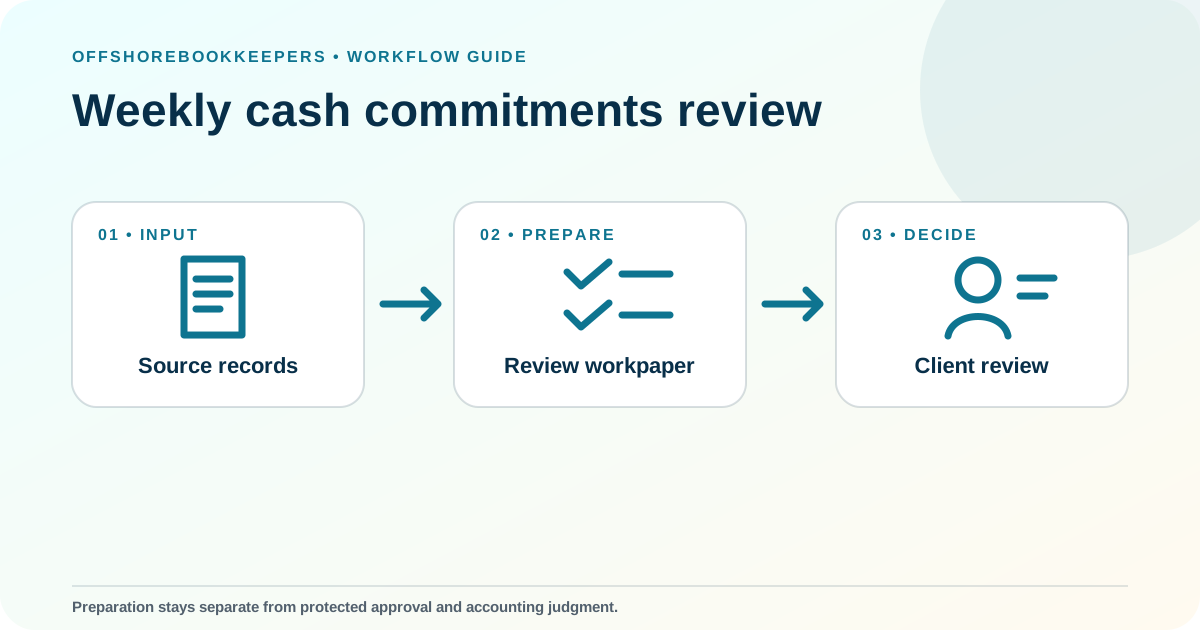
A bookkeeper can collect source reports, roll the schedule forward, compare it with bank activity, identify missing approvals, and highlight date or amount conflicts. The owner, controller, or treasury lead decides payment priority, delayed payments, transfers, borrowing, minimum cash levels, and treatment of disputed or discretionary items. Payment approvers release funds through the approved banking workflow; the schedule itself is not authorization.

Escalate obligations that exceed approved amounts, lack source support, conflict with a contract or calendar, use changed bank details, cross entity boundaries, or cannot be funded from the identified account. Do not solve a shortfall by moving dates or excluding items without an attributed decision.

Present ranges and exceptions honestly

Summarize commitments by week, entity, currency, status, and category. Keep confirmed totals separate from estimates and awaiting-approval amounts. List the opening cash source, known transfers, unresolved exceptions, decisions needed, reviewer name, and review time. The SBA's cash-flow guidance is a useful general planning reference, but each business should set its own horizon, authority matrix, and funding thresholds. Archive each weekly version so changes in amount, timing, and ownership remain explainable.

Questions owners ask

Is a cash commitments review a cash-flow forecast?

No. It is a dated inventory of known or reasonably expected obligations. A forecast also applies assumptions about receipts, timing, scenarios, and future activity.

Should an unapproved invoice be included?

Include it in a separate awaiting-approval or disputed status if it could affect cash, but do not present it as an authorized payment.

Who decides which commitments get paid?

The authorized owner, treasury lead, or payment approver decides timing and priority. The bookkeeper prepares the evidence and flags conflicts but should not release funds from the schedule.

Keep planning

Sources

  1. U.S. Small Business Administration, Manage your cash flow